Communities — Chapter 01
The Kashmir Tribal
Art Society
Our pilot partnership with Shahida Khanam — reviving the heritage of the Gujjar Bakarwal community in Bandipora, Jammu & Kashmir.
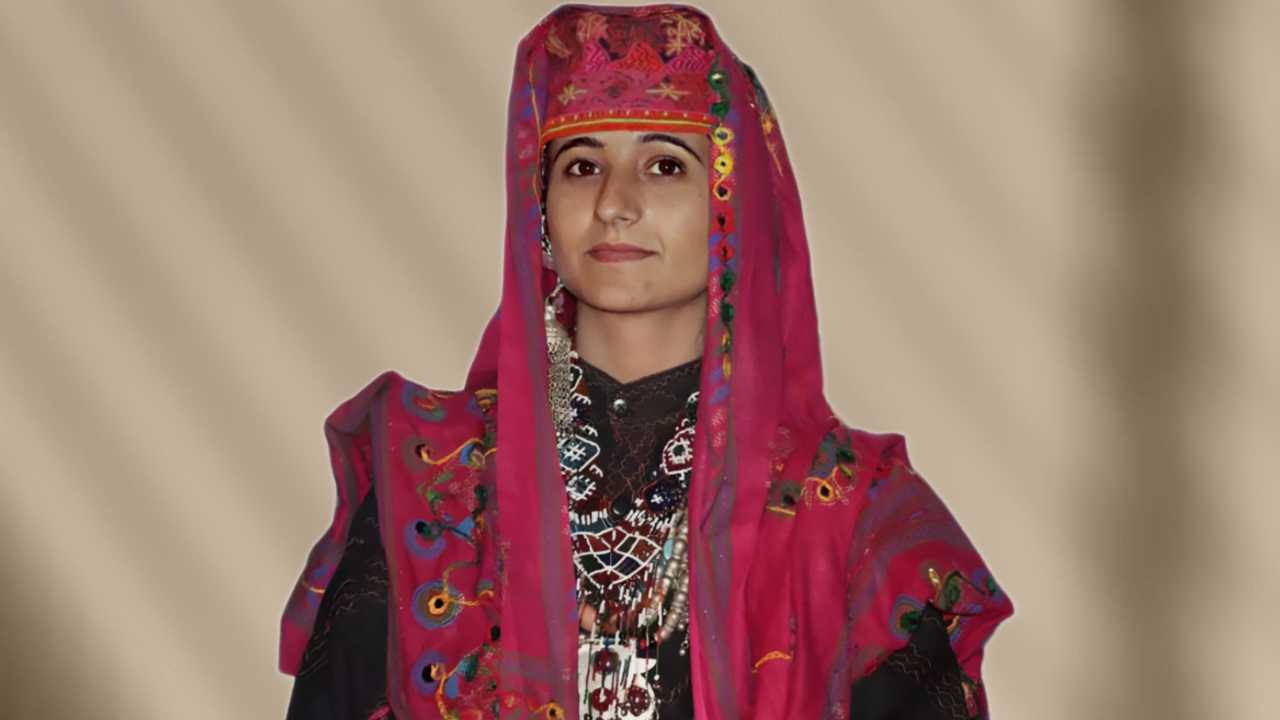
The Collaborator
Shahida Khanam
Founder of the Kashmir Tribal Art Society (Reg. No.: 7882), Shahida is a cultural practitioner dedicated to preserving the tribal heritage of the Gujjar Bakarwal community.
Her journey began in 2016 after attending a Bal Rang cultural event in Madhya Pradesh, where she witnessed other tribal communities proudly maintaining their customs. Realising her own community's identity was disappearing, she began documenting oral histories from tribal elders in Bandipora — eventually establishing the Valley's first community-run museum.
National recognition followed when Shahida was invited to present her designs before President Droupadi Murmu at Chashme Shahi.
What We've Built Together
The Achievements
-
01
The Training
In partnership with Anita University, Re-Root designed and delivered a structured skill development programme for women artisans in Bandipora — teaching cutting, stitching, and quality control so each piece could meet modern market standards.
-
02
The Product
We took centuries-old Kasheeda motifs and reimagined them for the contemporary wardrobe — without erasing what makes them sacred. The result is a product line that sells not despite its heritage, but because of it.
-
03
The Market
Before Re-Root, the craft existed. After Re-Root, it started selling. At least one product sells every day — directly improving artisan incomes and proving the model works.
-
04
The Archive
Many of the Gujjar Bakarwal community's most important stories exist nowhere in writing. Re-Root is documenting oral histories, migration songs, and craft techniques from community elders — preserving in permanent digital form what has only ever lived in memory.
Who They Are
The Gujjar Bakarwal Community
Among the largest Scheduled Tribe groups in Jammu and Kashmir, the Gujjar Bakarwal are known for their rich cultural heritage and deep connection with nature. Their pastoral lifestyle revolves around seasonal migration — transhumance — moving between lower valleys in winter and higher alpine pastures in summer.
Every year, families travel established nomadic routes through the forests, mountains, and valleys of the Himalayas. These journeys are not only economic necessities but cultural traditions — passed down through the Gojri language, folk songs, and elder storytelling.
Tribal women are the keepers of oral history and cultural memory. During evenings in temporary settlements, elders narrate stories about ancestral routes, customs, and community values — knowledge rarely written but carried through language.
Through embroidered clothing, traditional dress, beadwork, and jewellery, these women ensure that traditional designs, techniques, and cultural meanings survive and are appreciated by future generations.